KEYNSHAM’S creaking infrastructure must be improved to meet the demands of potential new homes over the next two decades, the town council has warned.
It says residents have already been plagued by burst water mains, regular power cuts, and sewage leaks as systems struggle to cope with current capacity.
The government has told Bath & North East Somerset Council to find space for more than 27,000 new homes in the area by 2043, suggesting that 14,000 be built in the city of Bath and 13,000 elsewhere in the district. But in its Local Plan options, B&NES Council has assigned just 7,000 new homes to the city, leaving North East Somerset to absorb the rest.
Keynsham Town Council, in its response to the proposals, says this allocation is neither fair nor proportionate.
More than 4,000 homes are proposed for Keynsham, not including Hicks Gate. This would give the town a projected population of between 33,689 and 37,564, an increase of 117% to 142% on the 2011 census.
“Keynsham Town Council therefore calls for a fairer, evidence-based redistribution of housing numbers, stronger local involvement in planning decisions, and a genuine commitment to sustainable infrastructure investment that benefits all communities within the authority area – not just the city of Bath.”
Agreements struck with developers as part of planning permission are a vital tool for securing funding for infrastructure, schools, transport, and community facilities, the town council says. As it is best placed to understand the needs of its community, it must be involved in negotiating such improvements.
Many proposed sites, including South East Keynsham, North Keynsham, and West Keynsham, are currently designated green belt.
The council says development on such land should only proceed where no viable alternatives exist, there is clear evidence of exceptional circumstances, and remaining green-belt land is enhanced in compensation.
“The green belt is vital for biodiversity, recreation, and the character of our town. Its loss must not be taken lightly.”
The council calls for any new housing developments to prioritise family homes that are “genuinely affordable”, including rent and shared ownership schemes that reflect local incomes. Social housing must be built to a high standard.
The most significant development proposed in the Local Plan – for North Keynsham – is supported by the town council.
But it says that 2,000 high-density homes with good infrastructure should be built there, or none at all.
Concerns about road access and flood risk would need to be mitigated, and wildlife along the River Avon protected. A significant green gap between this and any development in Saltford would also need to be maintained.
Such a development would also need a primary school, shops, doctors and dentists, and a cultural facility such as a large theatre or conference centre for use by local communities.
The town council also supports proposals for 80 to 100 homes east of Avon Mill Lane.
Within easy reach of the town centre, this would be a good location for bungalows for the town’s ageing population, it says.
It would also enable the relocation of industries that have disturbed nearby residents. But alternative employment sites would need to be found to ensure no jobs were lost.
At Hicks Gate, the town council supports proposals for up to 1,550 homes, citing good access onto the A4 and the creation of a transport hub. But it has concerns that access onto the A4175 from Durley Hill via any proposed new junction could create an accident blackspot without proper safeguards.
Proposed developments in other area of Keynsham are opposed by the town council.
At South East Keynsham, it says the B3116 Wellsway is too narrow to cope with traffic from 350-500 new homes. It is also too far to walk to the town centre, Chandag Road convenience store, and local schools. Development would also result in the loss of land used to grow food and for grazing.
Two sites in West Keynsham (400-550 homes) are considered unsuitable because they would increase traffic on the already congested Charlton Road, threatens jobs at Lay Farm Trading Estate, adversely affect wildlife, and narrow the green gap between the town and Stockwood and Queen Charlton.
In East Keynsham, the town council says access along a single-track road is inadequate the 130-170 homes proposed, while widening it to a two-way road would risk creating a rat run. The site, which adjoins Manor Road Community Woodland, is also rich in wildlife such as badgers, deer, foxes, rabbits and bats.
In Central Keynsham, proposals to build up to 100 new homes by putting flats on both Labutt car parks and half of Ashton Way car park are opposed. The town council says B&NES Council’s plan to cut the number of parking spaces in the town over the next two decade is not feasible, as parking is needed for shoppers and employees.
“You cannot transport the weekly shop for a family on your bike or on a bus,” it says.
The South Keynsham site (400-500 homes) would involve “unfair encroachment” on the green belt between Keynsham and Compton Dando parish and would put too much pressure on routes such as Charlton Road.
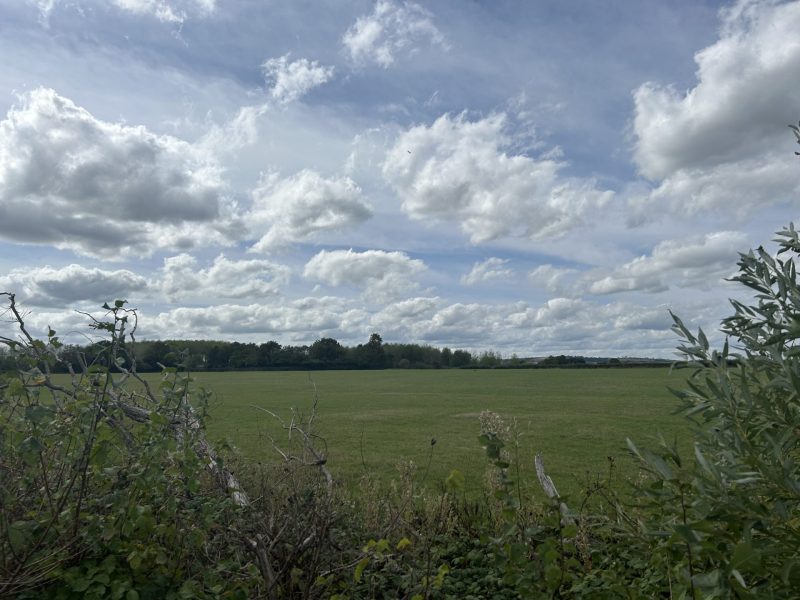
Pictured, fields to the west of Charlton Road are earmarked for potential new housing in the proposed Local Plan
‘Keynsham needs better infrastructure for new homes’