A SOLAR farm can be built on green-belt land in Burnett, a planning inspector has ruled.
Conrad Energy (Developments) II Ltd submitted a planning application to develop the 70-acre site in Middle Piece Lane in 2024.
The plan was met with objections from nearby residents who believed the landscape would be “blighted with an industrial-scale eyesore”, although some supported the renewable energy project.
The company told B&NES Council’s planning committee in September last year that the scheme was a “direct response” to the council’s climate emergency declaration, made in 2019. But the committee voted to refuse permission on the grounds of inappropriate development in the green belt, significant harm to the landscape, and adverse visual impacts.
The applicant then appealed against the decision. And now a planning inspector appointed by the Secretary of State has ruled in its favour.
The inspector said that the four large fields comprising the site were lower grade agricultural land. Although they were in the green belt, they could be considered grey-belt land, meaning that they lacked a strong role in protecting the countryside.
Having visited the site, the inspector said that the solar farm and its infrastructure would have a “significant adverse effect on the character and appearance of the local landscape”.
It would also adversely affect the rural backdrop of nearby listed buildings, such as the Grade II-listed Manor House, dating from the 17th century, and the Church of St Michael, originating from the 13th century.
However, these factors had to be balanced against the benefits of a renewable energy project that would generate up to 22 GWh of clean electricity annually, equivalent to meeting the needs of around 5,574 households.
The development would also help to enhance energy security through the provision of a secure, diversified and decentralised source of renewable energy, consistent with national policy objectives. This was of particular importance as the energy sector moved away from fossil fuels and responded to increasing demand.
The solar farm would also bring ecological and landscape enhancements to the site through biodiversity net gain (BNG) of 54% of habitat, 12.95% of hedgerows and 19.88% of watercourse units.
The inspector concluded: “Taken together, these considerations weigh substantially in favour of the proposal and offset the harm and weight I have given to the proposal’s effects on the setting of listed buildings and local character and appearance, as well as the associated conflict with the development plan. Accordingly, the proposal is judged to be acceptable, having regard to the material considerations.”
The inspector imposed several conditions, including that the solar farm should operate for no more than 40 years, after which the land should be restored to its previous condition.
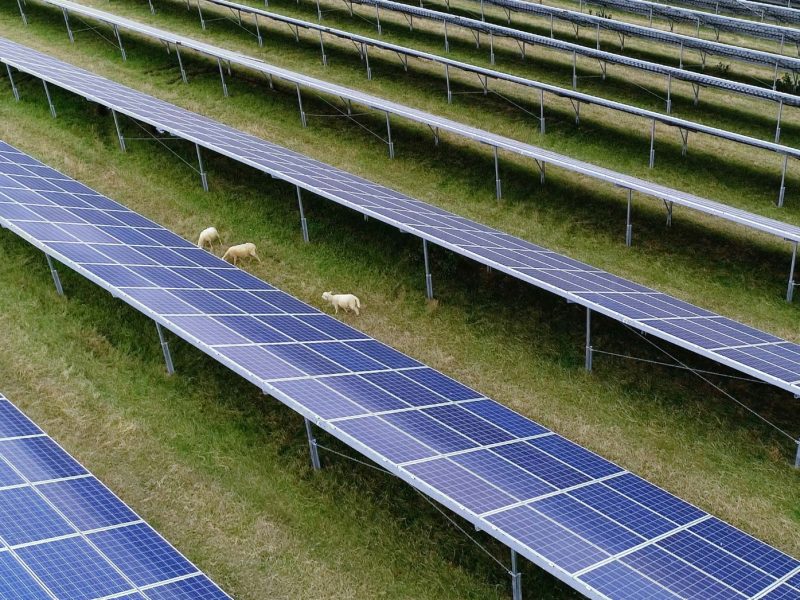
Pictured, Conrad Energy says the Burnett solar farm will be grazed by sheep to help enhance the establishment of a wildflower meadow
Image: Conrad Energy (Developments) II Ltd
Burnett solar farm plan approved on appeal