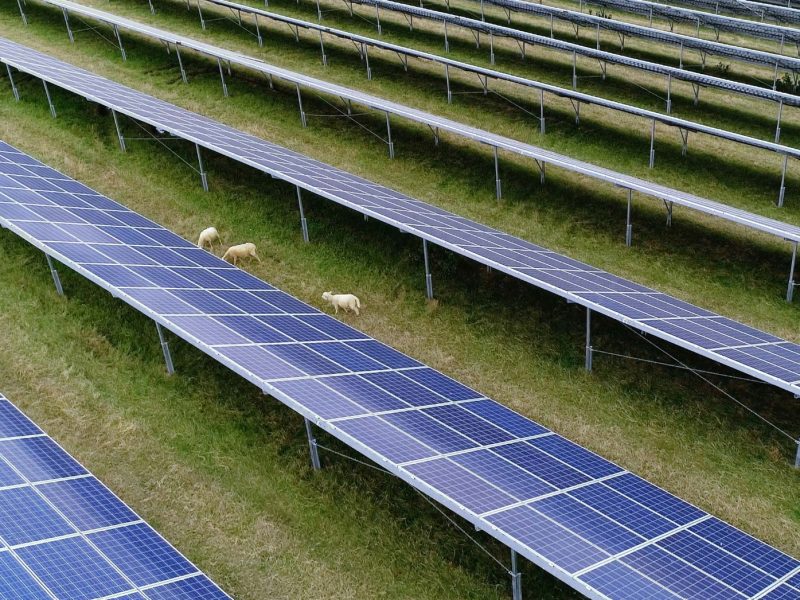
AN ENERGY company has appealed against the rejection of plans for a proposed solar farm at Burnett.
A planning inspector appointed by the Secretary of State was due to visit the site in Middle Piece Lane before reaching a decision.
The proposals by Conrad Energy (Developments) II Ltd were rejected by Bath & North East Somerset Council’s planning committee.
The applicant’s agent told the committee last September that the scheme was a “direct response” to the council’s climate emergency declaration, made in 2019.
The proposed 28.2-hectare solar farm would have generated enough electricity to power 5,763 homes and increased the renewable energy being generated in the area by two fifths.
But the planning committee voted to refuse planning permission on the grounds of inappropriate development in the green belt, significant harm to the landscape, and adverse visual impacts.
The council received 41 objections citing concerns including the loss of agricultural land, the impact on the green belt and the risk of flooding.
Six letters of support were received citing renewable energy, continued dual use with agriculture and limited local impact.
Announcing its appeal, Conrad Energy (Developments) II Ltd said it “strongly disagrees” with the council’s refusal.
It states that the proposed solar farm is “broadly consistent” with the development plan when read as a whole, and with national policy support for renewable/low carbon energy.
While the scheme is acknowledged to be in the green belt, the appellant argues the site should be treated as “grey belt” under the updated National Planning Policy Framework (NPPF) because it does not strongly contribute to green-belt purposes.
It disputes the assertion of “significant” landscape harm and says the scheme is fully reversible, with the land capable of being restored to agricultural use after the solar farm’s anticipated 40-year life span.
The appeal has received more than 20 comments from people supporting the council’s refusal of the scheme.
One objector said: “Green-belt land exists to protect the countryside from inappropriate development, prevent urban sprawl, and preserve the openness and character of rural areas.
“The construction of a large-scale industrial solar farm on this site would directly conflict with these fundamental planning principles.”
Another said: “This site has been turned down previously by BANES planning and councillors on more than one occasion because of the impact on landscape. Nothing has changed. The appeal proposal is the same, no compromise is suggested.”
The objector added that there are already two large solar farms locally, one near Hunstrete and the other at Compton Dando.
“As with this site, good farmland has been repeatedly sacrificed. No more green belt should be lost in this small area.”
Appeal against Burnett solar farm plan rejection